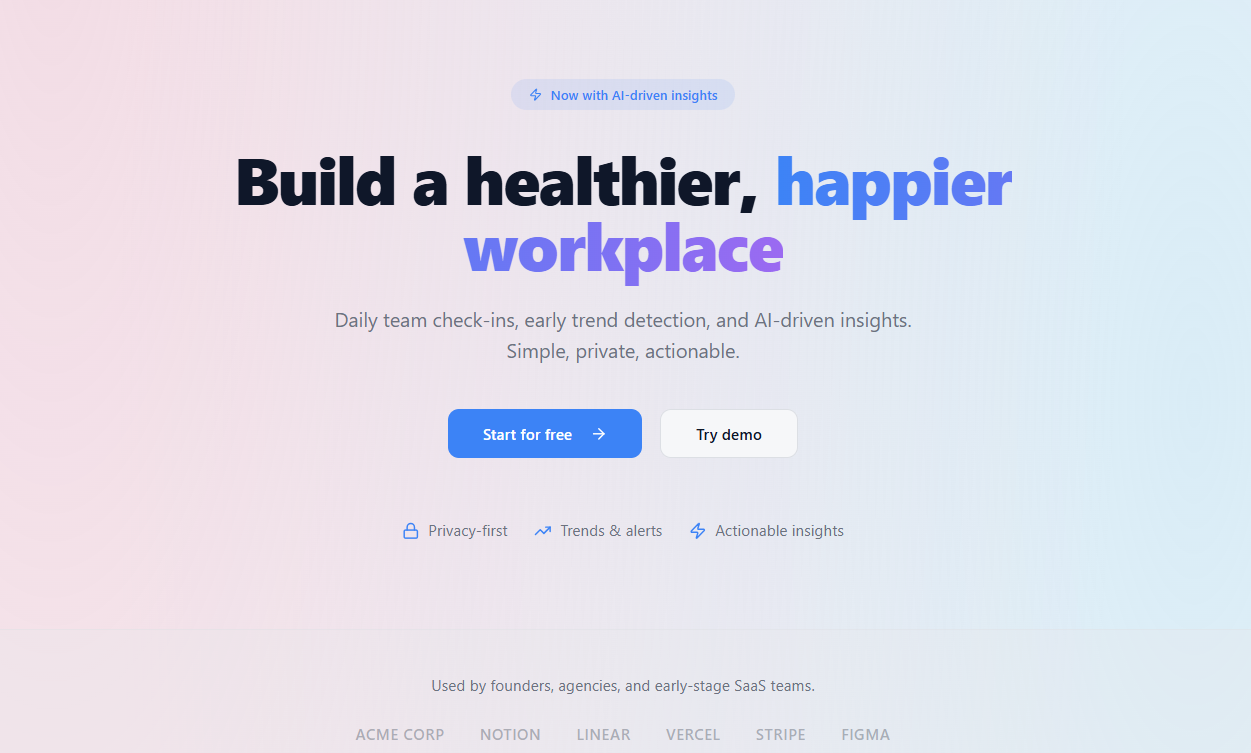


MoodTrack is a mental wellness SaaS product designed to help users track their daily mood, reflect on patterns, and build healthier emotional habits over time. Instead of complex journaling or overwhelming analytics, users simply log how they feel each day and receive clear visual insights into their emotional trends. The goal was to create a lightweight, intuitive experience that encourages consistency while still providing meaningful feedback.
Most mental wellness tools are either too complex or too passive. Users often abandon apps that require too much input, while simpler trackers fail to provide useful insights. The challenge was to design a system that balances simplicity and value — allowing users to log moods quickly while still generating insights that feel relevant and actionable. Additionally, the product needed to feel calm, non-intrusive, and emotionally appropriate.
MoodTrack was built as a focused daily tool rather than a feature-heavy platform. Users can log their mood in seconds, optionally add notes, and immediately see how their emotional patterns evolve over time. The experience emphasizes: • low friction input • clear visual feedback • gentle guidance instead of overwhelming data The interface is designed to feel minimal and calming, while the system works in the background to organize and interpret user data.
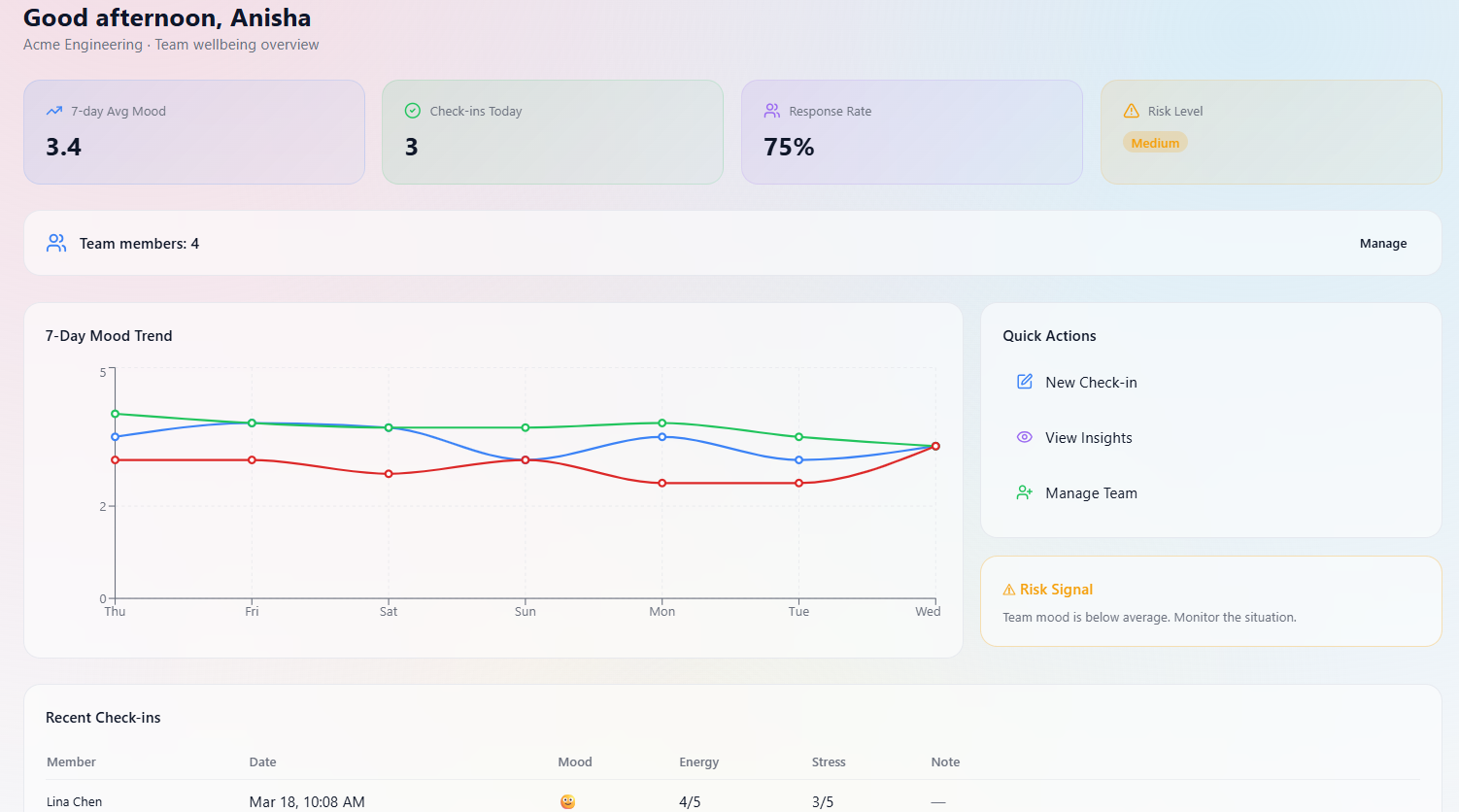
• Daily mood logging system (quick input flow)
• Mood history and timeline view
• Visual insights (trends and patterns)
• Notes and reflections system
• Dashboard with key emotional metrics
• Full CRUD functionality
• Authentication and user-based data isolation
• Empty states and onboarding-friendly UX
• Marketing landing page
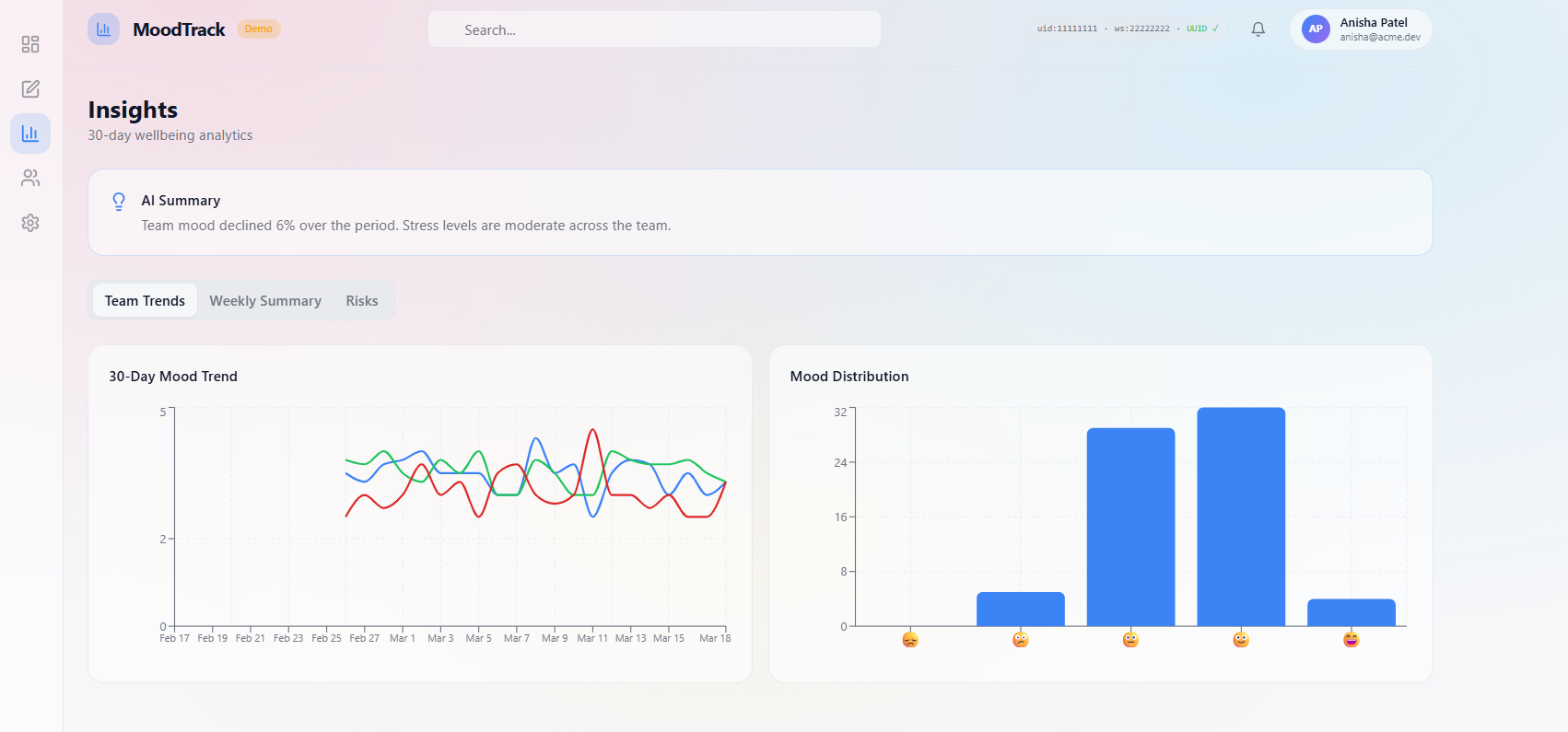
The product was built as a full-stack application using React and a cloud database. The focus was on creating a responsive and reliable data flow, ensuring that every logged mood is instantly reflected across the interface. Special attention was given to: • structuring mood data for easy aggregation and visualization • maintaining real-time UI updates • handling empty states and first-time user experience The system was designed to remain simple on the surface while supporting scalable data handling in the background.
One of the main challenges was designing a system that feels lightweight but still valuable. Too much complexity would discourage usage, while too little would make the product feel pointless. Another challenge was building meaningful insights from minimal data input. Ensuring that visualizations remain clear and helpful without overwhelming the user required careful balance. Maintaining consistency between user input, stored data, and displayed insights was also critical for a smooth experience.
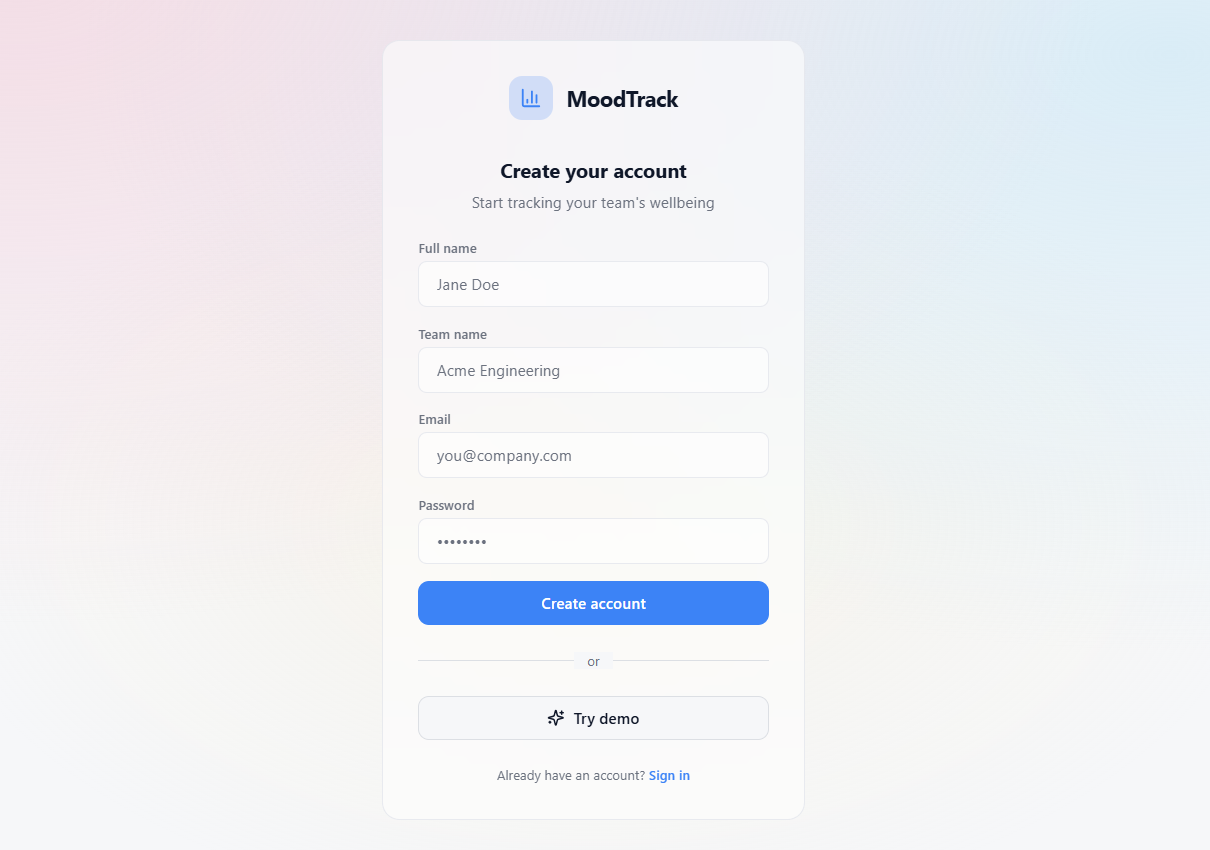
MoodTrack evolved into a fully functional mental wellness product with a clean and intuitive user experience. It includes authentication, persistent data storage, and a complete flow from daily input to long-term insights. The project demonstrates my ability to design user-centered products that balance simplicity, usability, and meaningful functionality — especially in sensitive domains like mental wellness.